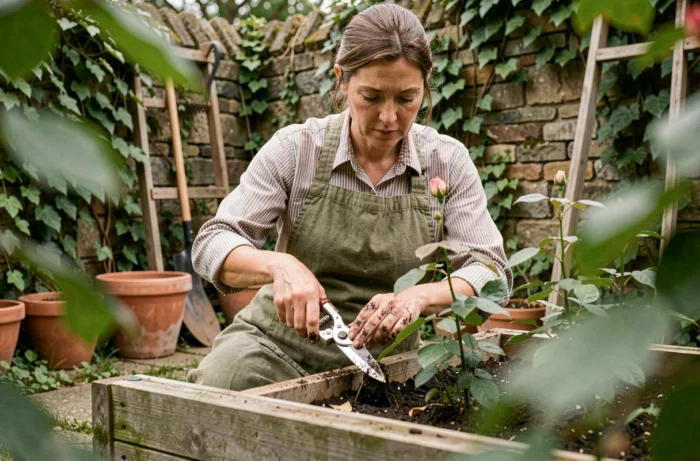
A yellowed lawn in August, rose bushes that struggle in spring, a vegetable garden overrun with bindweed in just a few weeks: these situations rarely have a single cause. They almost always result from a mismatch between the action taken and the moment it should have been taken. Successfully maintaining your garden year-round relies less on the amount of work and more on the right timing, suited to your soil and local climate.
Watering restrictions: what changes for your garden
You may have noticed that watering rules vary from one summer to another, sometimes from one municipality to another? Since the summer of 2026, the ban on watering gardens during certain hours has become widespread in most French departments. The prohibited hours can extend from 8 AM to 8 PM during the day.
The national framework distinguishes four levels: vigilance, alert, heightened alert, and crisis. In a crisis situation, only the vegetable garden can be watered, while ornamental gardens must go without water. Before each summer watering, the most reliable reflex is to check the online service VigiEau, which displays the drought level and the authorized or prohibited uses for your exact address.
This point is rarely addressed in traditional gardening guides, yet it conditions all garden maintenance in summer. Planning your plantings according to these constraints, for example by favoring drought-resistant perennials, avoids ending up with scorched flowerbeds due to lack of authorized watering. Resources like the Conseil Jardin net website allow you to stay updated on gardening news and anticipate these regulatory changes.
Mulching and soil work: two actions that condition everything else
Before discussing pruning, mowing, or fertilization, one question deserves to be asked: is your soil protected? Bare soil loses its moisture in just a few hours of sunlight. It compacts under rain. It leaves room for weeds.
Mulching to reduce watering and weeding
Mulching reduces the frequency of watering by two or three times on most soils. The principle is simple: a layer of organic material (dead leaves, branch mulch, straw, dried grass clippings) covers the soil around the plants. This layer limits evaporation, regulates soil temperature, and nourishes microbial life as it decomposes.
- In the vegetable garden, a mulch applied right after spring plantings protects young plants and reduces water stress in summer.
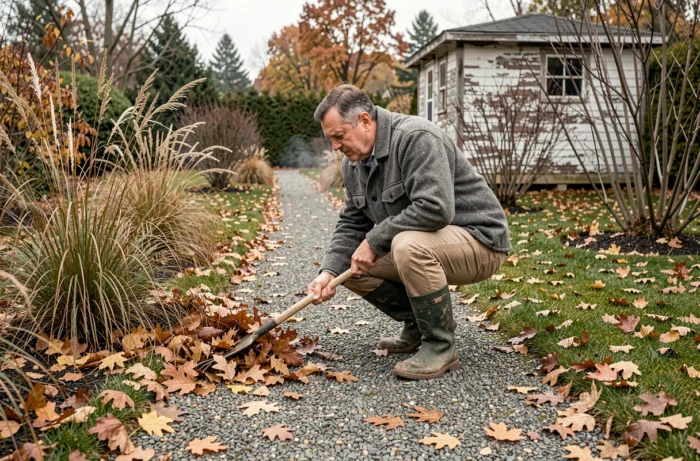
- In perennial flowerbeds and hedges, a leaf mulch applied in autumn decomposes over winter and enriches the soil before the vegetative resumption.
- On fruit trees, a thick mulch in a circle around the trunk (without touching the bark) retains moisture where the shallow roots draw water.
Rake rather than dig
Turning the soil deeply disrupts the soil fauna (earthworms, mycorrhizal fungi) that contributes to natural fertility. A simple raking of a few centimeters on the surface, done in spring and autumn, is enough to loosen the top layer without destroying this underground life. A living soil requires little work but at the right time.
Garden maintenance calendar: critical windows not to miss
Rather than a month-by-month program (each garden having its own conditions), here are the critical windows where an action taken at the right time saves weeks of work later.
End of winter: structural pruning
The period between mid-February and mid-March, before the buds break, is the ideal time to prune summer-flowering shrubs (buddleia, lavatera, hydrangea paniculata). Pruning before the vegetative awakening concentrates the sap on new shoots and produces a more generous flowering.
Note: spring-flowering shrubs (forsythia, lilac, mock orange) should be pruned just after their flowering, not before. Confusing them is the most common mistake.
Spring: fertilization and first plantings
When the soil reaches a stable temperature (approximately when weeds start to grow vigorously), it’s the signal to fertilize. A layer of mature compost spread on the surface and lightly raked in provides what the plants need to get started. Fast-release chemical fertilizers give a visible boost but do not nourish the soil: they feed the plant by bypassing the natural cycle.
Summer: water less but better
Watering generously once or twice a week is better than a trickle of water daily. Deep watering encourages roots to go down to seek water, making plants more resistant to drought. Shallow watering keeps roots near the surface, where the soil dries out the fastest.
If you use a microporous hose or drip irrigation, schedule watering early in the morning to limit evaporation. In case of restrictions (check VigiEau), concentrate the available water on the vegetable garden and this year’s young plantings.
Autumn: the most underestimated time
Autumn is the best season to plant trees, shrubs, and perennials. The still-warm soil allows roots to settle before winter, and natural rains ensure watering. Planting in autumn means having already rooted plants by the following spring, much less dependent on summer watering.
- Collect dead leaves from the lawn (they smother it) but leave them at the foot of hedges and in flowerbeds as natural mulch.
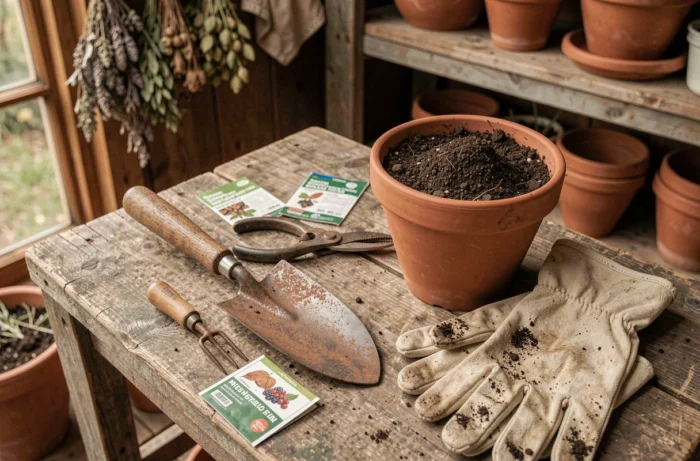
- Clean and sharpen your pruning tools before storing them: a clean pruner limits the transmission of diseases from one shrub to another.
- Spread compost or composted manure on the plots freed from the vegetable garden to nourish the soil over winter.
Adapting garden maintenance to your soil and exposure
A piece of advice that works on clay soil in Normandy may be counterproductive on sandy soil in Provence. Why? Because clay retains water (and sometimes too much), while sand lets it drain away.
Knowing your soil texture guides all your decisions: watering frequency, choice of mulch, type of compost, selection of plants. A simple test involves taking a handful of moist soil and trying to form a sausage. If the sausage holds, your soil contains a lot of clay. If it crumbles immediately, it is sandy.
Exposure plays a comparable role. A south-facing flowerbed in a Mediterranean area will not receive the same plants as a shaded bed under deciduous trees. Adapting the plant to the location rather than forcing the location to suit the plant remains the most effective principle for reducing long-term maintenance.
The best-maintained garden is not the one that requires the most work. It is the one where every action occurs at the right moment, on a soil understood and respected, with plants chosen for their actual adaptation to the conditions of the land.