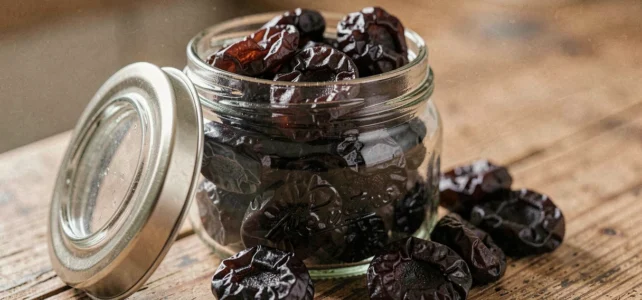
Prunes are dried fruits whose water content has been significantly reduced during the drying process. This characteristic gives them a much longer shelf life than fresh fruits. The date printed on the packaging does not always indicate a real danger, and distinguishing it from a true health limit changes everything.
DDM or DLC on prunes: two mentions, two logics
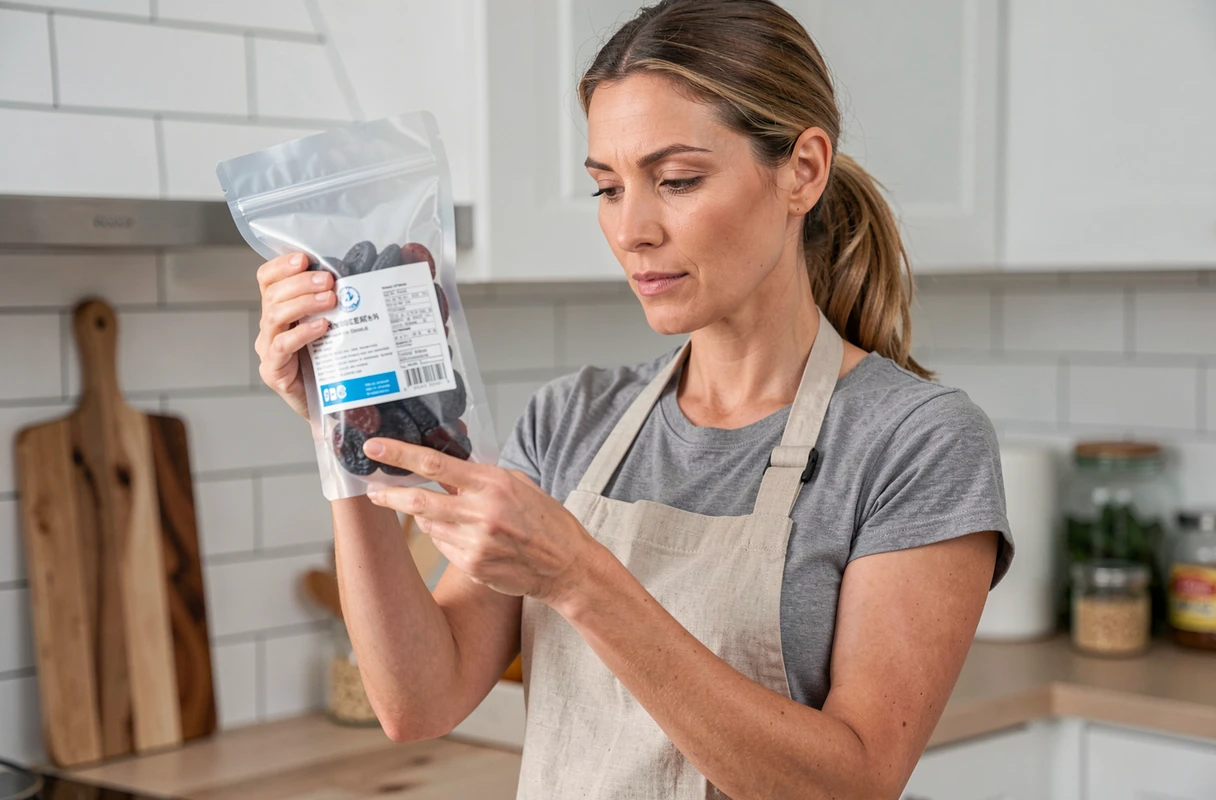
Before deciding whether an expired bag of prunes should be thrown away, it is important to identify the mention on the packaging. The DDM (minimum durability date) is recognized by the phrase “best before.” It indicates a potential decrease in taste or texture quality, not a health risk.
The DLC (use-by date), preceded by the mention “consume by,” pertains to perishable goods. Most dried prunes sold in bags have a DDM. However, some preparations made with moister prunes, or prunes in jars preserved in syrup, may fall under a DLC.
A dried prune whose DDM has been exceeded by a few weeks or even months is generally still consumable. The fruit may have lost some softness or aroma, but its low water activity slows bacterial development. To learn everything about storing prunes after opening, the DDM/DLC distinction remains the starting point.
Warning signs: when to throw away prunes without hesitation
The date on the packaging does not replace a sensory examination. A prune whose DDM has passed may still be perfectly healthy, while a poorly stored prune can degrade before this date.
Three criteria justify throwing the product away immediately:
- Visible mold: white, green, or grayish spots on the fruits or inside the bag. A moldy prune cannot be “saved” by removing the affected part, as mycotoxins spread throughout the entire fruit.
- Suspicious odor: a healthy prune emits a sweet, slightly caramelized smell. A sour, fermented, or rancid note indicates advanced degradation.
- Swollen packaging: a bag or jar with a bulging lid indicates gas fermentation. For homemade preserves, a lid that does not stay depressed is a serious signal, as it may indicate the development of anaerobic bacteria.
If none of these signs are present, a dried prune that has exceeded its DDM can be consumed. Its texture may be firmer, sometimes a bit tough, but it does not pose any particular danger.
Storing dried prunes after opening: common mistakes
The bag of prunes purchased in the store is packaged under protective atmosphere. Once opened, this protection disappears, and the fruit absorbs ambient moisture, which accelerates its degradation.
Hermetic container and location
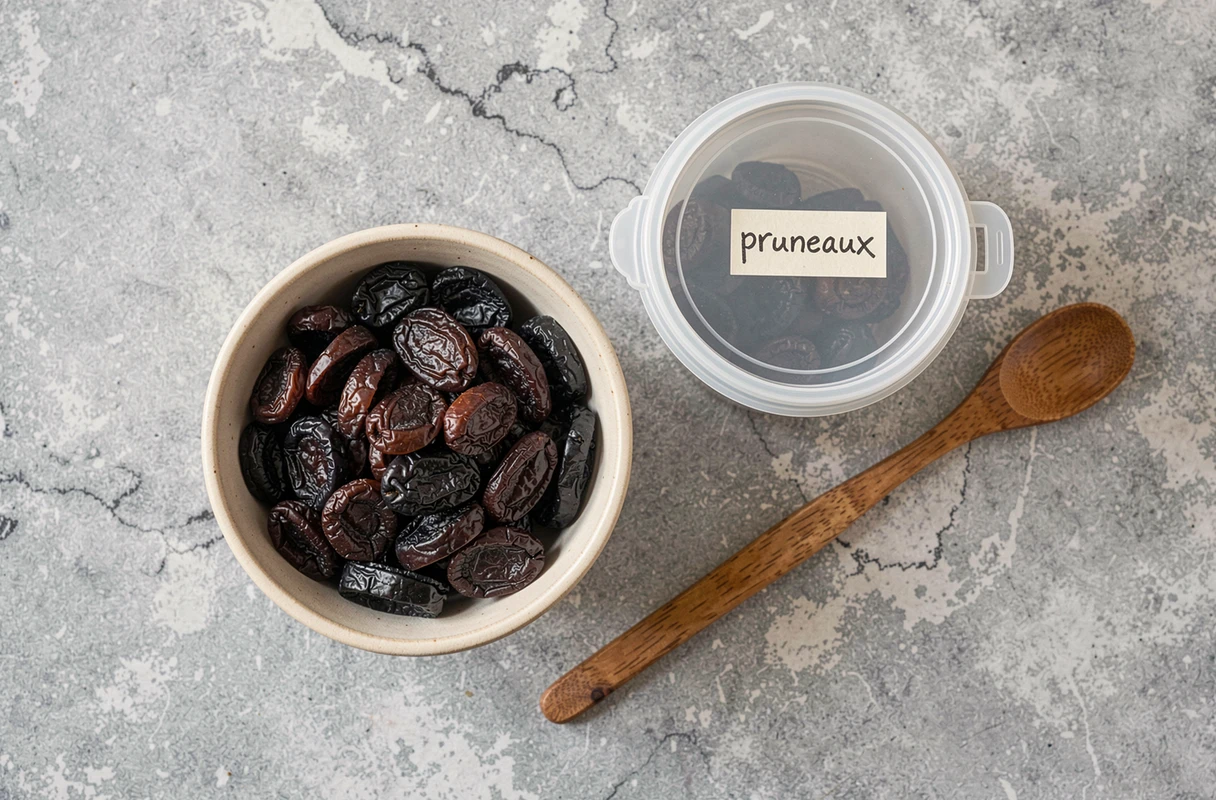
The most effective reflex is to transfer the prunes to a hermetic container as soon as it is opened. A glass jar with a seal or a food box with a tight lid is suitable. The goal is twofold: to prevent moisture from entering and to avoid the prunes absorbing surrounding odors.
The ideal storage is away from heat and light. A cool cupboard is sufficient in most cases. Several brands also recommend refrigerating after opening, which limits rancidity and drying over time.
Prunes in jars or canned
Prunes sold in jars (often in syrup or juice) follow a different logic. After opening, they must be refrigerated and consumed within a few days. The consumption window is around five to seven days for this type of product, as the humid environment promotes microbial proliferation much faster than for a dried fruit.
Closing the jar without contaminating it (clean spoon, no fingers in the jar) extends this duration. Leaving an open jar at room temperature for several hours significantly reduces the safety margin.
Expired prunes and health: what drying really changes
The drying of plums drastically reduces their water activity. Pathogenic bacteria (salmonella, listeria) need a minimum of free water to multiply. A properly stored dried prune offers a very unfavorable environment for these microorganisms.
This does not mean that the risk is zero. A prune that has regained moisture, for example in a poorly sealed bag in a warm kitchen, becomes a conducive environment again. The color darkens, the texture becomes stickier, and fermentation can begin without immediate visible signs.
Moreover, prunes are rich in fiber and polyols, compounds with a laxative effect. In a very old product, the concentration of these substances remains the same, but digestive tolerance may vary if the fruit’s flora has changed. In case of doubt, it is better to taste a single prune and wait a few hours rather than consume a whole handful.
Summary of shelf life according to the type of prune
| Type of prune | Before opening | After opening |
|---|---|---|
| Dried prune (bag) | Several months after the DDM if well stored | Hermetic container, cool cupboard or refrigerator |
| Prune in jar/can | Respect the date (DLC or DDM depending on the product) | Refrigerate, consume within a few days |
| Moist preparation based on prunes | Check the DLC | Refrigerate immediately, do not exceed the DLC |
The most reliable criterion remains the examination of the product itself. A dried prune without mold, without suspicious odor, and stored in intact packaging poses no problem, even beyond the DDM. Conversely, a moist product opened for more than a week in the refrigerator should be discarded, date or not.