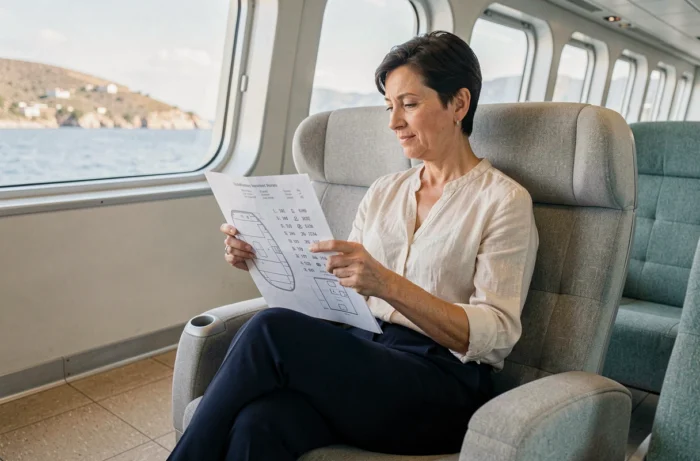
On Corsica Ferries, the difference between a pleasant crossing and a difficult night often comes down to the booking process, not on board. The choice of seat type and its location on the ship directly affects comfort level, noise experienced, and even the price paid. Here, we detail the technical criteria that allow for the right decision-making.
Numbered seats on Corsica Ferries: what the numbering really changes
Corsica Ferries offers in 2026 numbered seats as a distinct option from cabins. This option lies between free seating (deck or common lounge) and a closed cabin. The numbered seat guarantees an assigned seat, which avoids the rush for free seats upon boarding.
Not all seats are created equal. On the ships in the fleet, the lounge seats are spread across several decks. The rows located at the front of the ship experience more pitching, especially on long overnight crossings. The central rows, closer to the center of gravity, offer significantly better stability.
We recommend prioritizing seats located on the intermediate decks, halfway along the ship. This is where rolling and pitching are felt the least. A good choice of location and seats on Corsica Ferries is based on this positioning criterion above all else.
Note: the lounge areas remain lit and partially noisy even during overnight crossings. A sleep mask and earplugs are not unnecessary comforts; they become essential accessories for anyone not booking a cabin.
Cabin or seat on a Corsican ferry: the real calculation to make

The classic reflex is to compare the price of a seat with that of a cabin. In 2026, a survey of Corsica Ferries crossings shows that a round trip in a seat can vary from 49.50 euros to over 122 euros depending on the route. This wide range means that the seat is not always the economical option one might think.
On some short routes (Nice-Bastia for example), the seat remains relevant: the crossing lasts a few hours, and sleep is not the main issue. On long routes departing from Toulon, with a complete overnight crossing, the cabin radically changes the experience. Corsica Ferries cabins are equipped with private shower and toilet, which eliminates waiting lines for shared restrooms.
The relevant calculation is not “cabin versus seat” but “duration of crossing versus extra cost of the cabin.” For an overnight crossing exceeding six hours, the cabin becomes a comfort investment rather than a luxury expense.
Traveling in groups changes the equation
A cabin shared between three or four passengers often costs less per person than an individual numbered seat. We observe that many travelers book seats out of reflex, without checking the price per head of a cabin on the same crossing.
Advance booking and seat availability during the summer season
Seat and cabin bookings go first on high season crossings. This is not a sales argument; it’s a market observation: cabins and spaces for large vehicles fill up before the rest. Waiting until the last moment in summer means accepting what’s left, often a free passage without an assigned seat.
Booking as soon as sales open allows for two things:
- Choosing the exact location of the seat or the deck of the cabin, which determines the actual comfort on board
- Accessing the lowest rates, as Corsica Ferries’ pricing grid is indexed to the occupancy rate
- Securing a spot for the vehicle on the garage deck, as spaces for camper vans and converted vans are limited
The appropriate booking window is several months before departure for July and August crossings. In low season, the pressure is lower, but the routes are also less frequent.
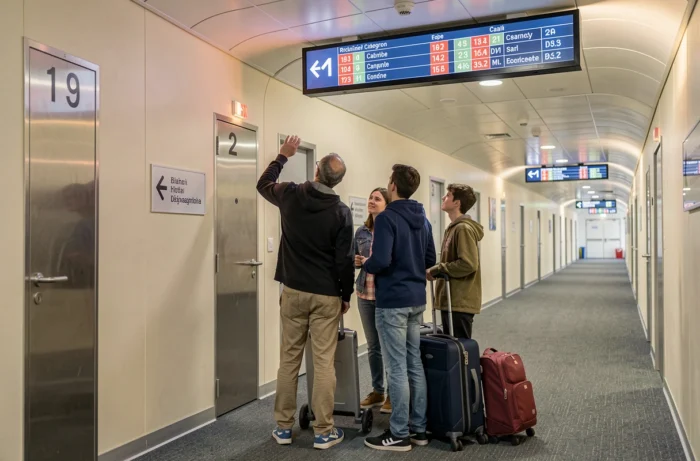
Choosing the departure port: direct impact on crossing comfort
The departure port determines the duration of the crossing, and thus the relevance of the type of seat reserved. Toulon is Corsica Ferries’ preferred port, with crossings to several Corsican ports. Nice offers the shortest crossing to Corsica, making the seat perfectly suitable even for passengers sensitive to seasickness.
A often overlooked point: the land route to the port weighs as much as the crossing itself in terms of fatigue. Choosing Nice to save two hours at sea but adding four hours of driving from Lyon makes no sense. The right decision incorporates the entire journey, door to door.
Sea conditions by season
Summer crossings generally benefit from calmer seas, but the mistral can make the Mediterranean choppy even in July. On a formed sea, the difference between a seat on the upper deck and a low interior cabin becomes glaring. Passengers prone to seasickness should book as low and centrally on the ship as possible, whether in a cabin or a seat.
What Corsica Ferries rates really include
The displayed rate for a seat covers the seat itself and access to the ship’s common areas (outdoor decks, restaurants, shops). It does not include blankets, pillows, or individual power outlets on all ships. Checking these details at the time of booking avoids unpleasant surprises at boarding.
Cabins include bedding, private bathrooms, and a closed space. On overnight crossings, this difference in service justifies the price gap for most traveler profiles, especially families with children and passengers over sixty.
- Numbered seat: guaranteed place, no night equipment provided, access to shared restrooms
- Interior cabin: private space, shower, toilet, bedding, relative quiet
- Exterior cabin (when available): same amenities plus porthole, possible natural ventilation
The final choice depends on the balance between crossing duration, number of passengers, and overall travel budget. On a short daytime route, the seat is more than sufficient. On an overnight crossing of more than six hours, the cabin remains the most rational choice to arrive rested in Corsica.