
Lulutox Tea has been circulating massively on social media for several months, driven by promises of quick detox and weight loss. This tea, primarily sold online and outside traditional pharmaceutical channels, presents itself as a blend of natural ingredients (ginger, dandelion, lemongrass). Its regulatory status remains that of a dietary supplement, not a medication. User feedback paints a more nuanced picture than the marketing discourse.
Composition and traceability of Lulutox Tea: what the label doesn’t always say
The first reflex when faced with a product of this type should focus on the list of ingredients and their origin. Lulutox lists components known to the general public: ginger, dandelion, lemongrass, among other plants associated with digestion or drainage.
The problem does not necessarily lie in these announced ingredients. The ANSM (National Agency for the Safety of Medicines) regularly warns that for products purchased outside the official circuit, the actual composition may differ from what is stated on the packaging. Reports of serious adverse effects have been received for products in this category.
A detox tea purchased online is not subject to the same controls as a product sold in pharmacies. No marketing authorization is required, and compliance verification largely relies on the manufacturer itself. To better understand the potential dangers of Lulutox, one must go beyond a simple reading of the label and look into the actual traceability of the product.
- The geographical origin of the plants used is not always specified, making independent verification difficult.
- The exact dosages of each active ingredient are rarely detailed on the packaging or the sales site.
- The mention “natural” has no strict regulatory value in terms of food safety.
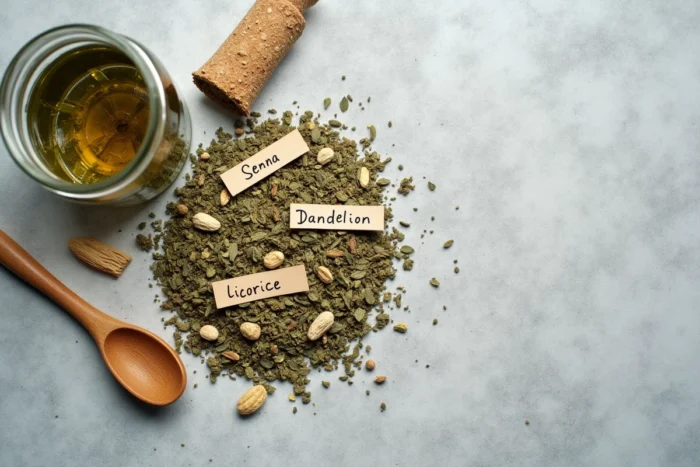
Adverse effects of detox teas: what field reports reveal
Consumer reviews collected on various platforms mention digestive issues (cramps, diarrhea), increased fatigue after a few days of use, and sometimes headaches. These effects are consistent with the presence of laxative plants, common in detox teas.
A often-overlooked point: regular consumption of laxative teas can disrupt electrolyte balance, particularly potassium levels. If this imbalance becomes chronic, it can lead to consequences for heart rhythm and muscle function. Anyone on medical treatment should consult a doctor before adding this type of product to their routine.
Interaction with medications
The plants contained in detox teas can interact with certain treatments. Dandelion, for example, has diuretic properties that can amplify the effect of antihypertensive medications. Ginger, in high doses, can interfere with anticoagulants. No specific warnings accompany Lulutox Tea on these points, which is a notable gap for an over-the-counter product.
Commercial practices surrounding Lulutox: subscriptions and refunds
The contrast between marketing discourse and user feedback is not limited to health effects. A significant portion of user complaints concerns commercial and logistical issues.
Several testimonies on consumer forums describe a subscription mechanism activated without clear consent. Buyers report having ordered a single box only to find themselves charged for multiple successive deliveries. Cancellation and refund processes are described as lengthy and often unsuccessful.
This type of practice is not unique to Lulutox, but fits into a recurring pattern in the market for dietary supplements sold online. Using PayPal or a credit card without careful verification of the terms and conditions exposes consumers to recurring charges that are difficult to stop.
Lulutox and weight loss: dietary supplement or false anti-obesity medication
The marketing positioning of Lulutox suggests an effect on body weight. This promise deserves to be placed in its regulatory and scientific context.
A dietary supplement is not a medication and cannot claim therapeutic effects. Regulations on the advertising of dietary supplements prohibit claims related to weight loss in the absence of validated clinical studies. A tea presented as “causing weight loss” without scientific proof violates these rules.
Meanwhile, medical treatments for obesity have significantly evolved. Medications like GLP-1 analogs (Wegovy, Mounjaro), which are reimbursed in France, have demonstrated their effectiveness in rigorous clinical trials. Comparing a detox tea to these regulated treatments amounts to confusing two radically different categories of products.

What a detox tea can and cannot do
A herbal tea can contribute to hydration and provide a moment of digestive comfort. The available data do not allow for a conclusion regarding a measurable effect on body fat loss. The “flat belly” effect often touted primarily relies on laxative and diuretic action, which leads to temporary water loss, not a reduction in fat mass.
- Hydration and taste pleasure remain the only established benefits of such an herbal tea.
- No independent published study validates the detoxification claims attributed to Lulutox Tea.
- The weight loss reported by some users generally corresponds to water loss, reversible within a few days.
The market for weight loss dietary supplements is substantial and attracts players whose priority is not always scientific rigor. In the face of a product like Lulutox Tea, the most basic caution is to check the composition, read the terms of sale before any purchase, and seek a doctor’s advice in case of doubt. The issues reported by consumers concern both bodily effects and billing practices.