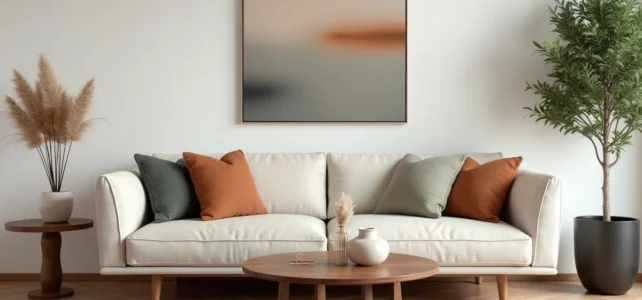
Cocooning in 2026 no longer resembles what it was three years ago. The accumulation of throws, candles, and stacked cushions is gradually giving way to more streamlined interiors, where the cocoon feeling relies on the quality of materials and the management of light rather than the quantity of objects. This evolution changes the way each room in the house is conceived, from the living room to the bedroom.
Thermal and sensory comfort: the invisible foundation of the modern cocoon
A modern cocoon primarily depends on structural parameters. The perceived temperature of the walls, the insulation of the main wall, ambient humidity, and acoustic comfort condition the feeling of well-being long before any aesthetic choices are made.
A living room with cold walls, even if carefully decorated, creates a diffuse discomfort that neither a wool throw nor soft lighting can compensate for. Conversely, a properly insulated room, with walls whose surface temperature remains close to that of the indoor air, generates immediate sensory comfort.
Controlling the light spectrum complements this foundation. Indirect lighting, positioned below eye level (low wall sconces, floor lamps directed towards the ceiling, LED strips behind furniture), alters the perception of space without adding any objects. For those who want to learn everything about News Déco home, these structural fundamentals are the starting point for a truly warm interior.
This approach assumes addressing the building envelope before moving on to visible decoration. Feedback converges: the cocoon feeling starts with the building’s skin, not its covering.
Natural materials and uncluttered surfaces: the streamlined cocoon version 2026
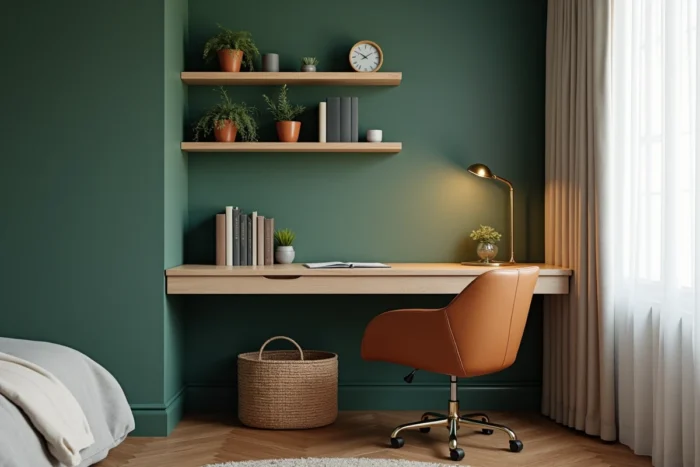
The recent shift in cocooning can be summed up in one formula: fewer objects, better materials. Raw wood, washed linen, natural stone, and boucle wool replace textile accumulations. Each material is chosen for its texture as much as for its appearance.
- Light wood (bleached oak, ash, natural beech) adds visual warmth without weighing down the space. A console, a tabletop, or open shelves are enough to anchor a room.
- Linen and washed cotton, in curtains or cushion covers, create a crumpled effect that evokes relaxation without falling into neglect.
- Stone (travertine, sandstone, matte terrazzo) used in a coffee table or as an accessory introduces a mineral contrast that visually structures the room.
- Boucle wool, in rugs or chair upholstery, provides a tactile density that synthetic fabrics cannot replicate.
The guiding idea is to free horizontal surfaces (tables, shelves, window sills) to allow materials to breathe. A living room with three well-chosen objects on a wooden console creates a more enveloping effect than a shelf overloaded with small frames and decorative candles.
Colors: the palette narrows
Natural tones dominate. Sandy beige, off-white, muted terracotta, sage green, and stone gray make up the essence of current cocooning palettes. Contrast arises from materials, not from bright colors. An ecru linen sofa placed on a dark wool rug creates visual depth without resorting to saturated hues.
Black, used in touches (lighting, frames, furniture legs), structures the whole and avoids the “all beige” effect that can turn bland. In contrast, multicolored bohemian associations or heavy prints move away from the streamlined cocoon trend.
Layered lighting: the technique that changes a room’s ambiance
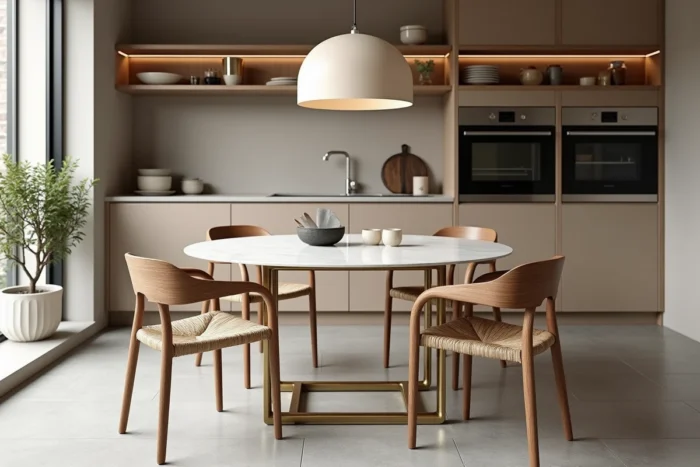
Lighting is the most underestimated lever in cocooning decoration. A single central ceiling light produces flat light that flattens contours and hardens faces. Layered lighting superimposes three levels of light in each room.
The first level, ambient lighting, comes from below or the middle: a floor lamp with a fabric shade, a wall sconce directed towards the ceiling. The second, functional lighting, targets activity areas: a reading lamp near the sofa, a low pendant above the table. The third, accent lighting, highlights an object or texture: a recessed spotlight directed at a shelf, a candle placed on a tray.
The color temperature plays a central role. Warm white bulbs produce an orange light that promotes relaxation. Workspaces or kitchens can handle slightly higher temperatures. Varying light sources transforms an ordinary living room into a cocoon, without touching the furniture or paint.
Plants and well-being: beyond the plant on a shelf
The presence of plants in a cocooning interior is evolving towards a more functional dimension. Some plants help regulate ambient humidity and improve air quality, directly aligning with the sensory comfort logic mentioned earlier.
Dense foliage plants (Boston fern, pothos, peace lily) are often cited for their purifying properties. Grouped in a corner of the room rather than scattered, they create a mass effect that visually anchors the space.
Vertical gardens, even small ones (a panel of stabilized moss, a plant frame), provide organic texture on a wall without taking up floor space. This approach is particularly suitable for small spaces where every square meter counts.
Field feedback diverges on the actual benefit of plants in terms of indoor air quality in a standard home. The decorative and psychological effect, however, is well documented: the presence of plants reduces the perception of stress in a living space.
The modern cocoon is therefore built from the inside out: first thermal and acoustic comfort, then natural materials on uncluttered surfaces, followed by thoughtfully layered lighting, and finally plants as a link between habitat and life. Each step reinforces the previous one, without any requiring an excessive budget or heavy renovation.