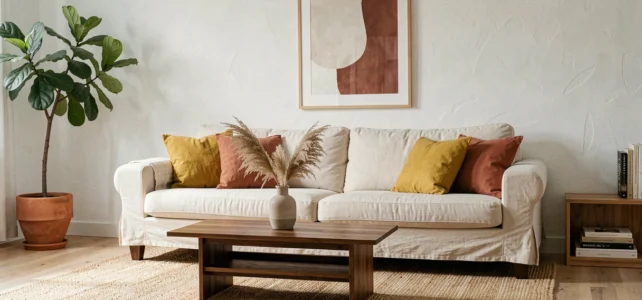
Home decoration is based on a principle that is often underestimated: every visual modification alters the perception of volumes, light, and thermal comfort in a room. Transforming an interior does not necessarily require major renovations, but rather an understanding of the mechanisms that make a space appear larger, brighter, or more cohesive.
Colour drenching: the painting technique that redefines an entire room
Colour drenching involves applying the same color to all surfaces of a room, from floor to ceiling, including moldings, doors, and radiators. This approach, identified as one of the major decor trends for 2025, breaks away from the classic logic of a single accent wall.
The effect produced is a total immersion in a hue. Architectural contours blur, creating an impression of continuous volume. A variant called double drenching takes the concept further by combining two saturated shades in adjacent rooms to create a stark contrast when passing through a door.
To successfully implement this technique, the choice of finish is as important as the color. A matte sage green on an old plaster wall does not yield the same result as a satin sage green on a smooth surface. The material of the substrate absorbs or reflects light differently, and it is this interaction that determines the final ambiance.
Earthy tones (ochre, terracotta, warm brown) work particularly well in colour drenching in north-facing rooms, where natural light lacks warmth. Deep blues or dark greens are better suited for spaces that receive direct lighting, as they absorb excess brightness without darkening the room.
Exploring resources on interior decoration at L’Atelier du Bricolage allows for a deeper understanding of these color choices with guides tailored to each type of room.
Raw natural materials: solid wood, linen, and stone in interior design
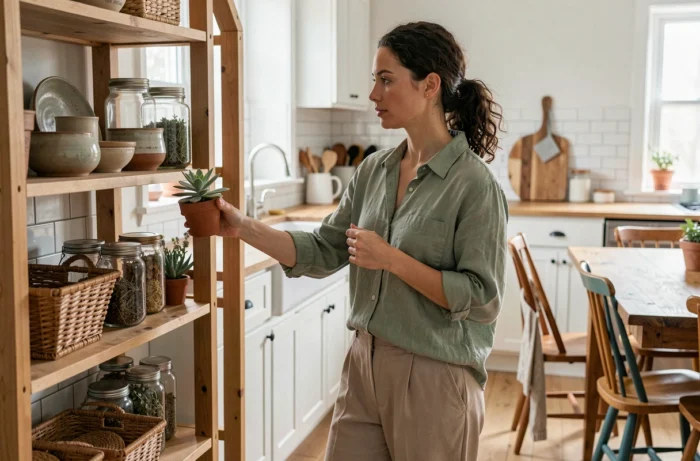
Interiors focused on sustainability now prioritize materials left in a state close to their original appearance. Unvarnished solid wood, natural stone, raw linen, and rattan are emerging as structural choices for interior design, according to trends observed for 2026.
This logic goes beyond aesthetics. A raw solid oak tabletop ages, develops a patina, and tells the story of its use. A laminate wood-look tabletop remains unchanged for five years and then degrades abruptly. Natural materials accept time, while synthetic materials endure it.
Combining materials without creating visual cacophony
A common pitfall is accumulating too many different natural materials in one space. Three operational rules can help avoid “overload”:
- Limit the main materials to three per room (for example: light wood, ecru linen, and black metal). Other materials should remain as accents.
- Choose a dominant material that covers the largest visible surface (floor or main furniture) and two secondary materials in decreasing proportion.
- Maintain a temperature consistency: warm woods (walnut, golden oak) pair well with brass and terracotta, while cool woods (bleached ash, light beech) work better with brushed steel and mineral gray.
An interior that respects this hierarchy of materials appears both rich and readable, without overwhelming the eye.
Invisible technology for everyday comfort
Visible home automation (wall-mounted boxes, multiple remote controls) gives way to a different approach: integrated technology that disappears into the decor. Adaptive lighting adjusts its color temperature according to the time of day. Voice commands control blinds or ventilation without an apparent control panel.
Sensors measure air quality, humidity levels, or energy consumption in real-time, without occupying visible space. This trend transforms home decoration because it frees walls and surfaces from bulky technical equipment.
Adaptive lighting and light ambiance
Well-thought-out lighting changes the ambiance of a room more than changing furniture. The multiplication of variable-intensity light points allows for a transition from work lighting (cold, directional) to relaxation lighting (warm, diffuse) within the same space.
Layering three types of light sources per room remains the most effective method: general lighting (ceiling fixture or pendant), functional lighting (desk lamp, kitchen spotlight), and ambient lighting (string lights, table lamp, LED candle). This layering creates depth and allows for atmosphere adjustments throughout the day.
Revamping a space without heavy renovations: high-impact levers
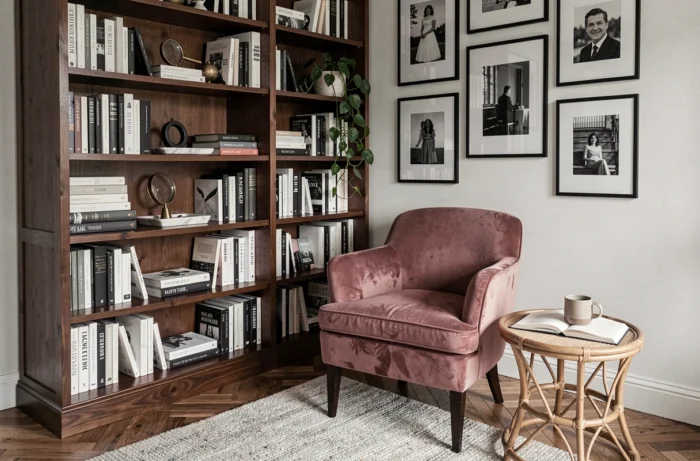
Some modifications produce a disproportionate effect relative to their cost and complexity. Moving a sofa a few centimeters, replacing cabinet handles, or changing the color of textiles (curtains, cushions, throws) can sometimes radically alter the perception of a room.
Textiles are the most underutilized lever in home decoration. A thick linen curtain that falls to the floor visually elongates a wall. A generously sized rug anchors a living room and delineates the living area without partitioning.
- Replacing an opaque lampshade with a light fabric model increases light diffusion throughout the room.
- Grouping decorative objects in odd numbers (three vases, five frames) creates a more natural visual balance than a symmetrical arrangement.
- Hanging curtains as close to the ceiling as possible, even if the window starts lower, gives an impression of increased ceiling height.
An interior transforms through the accumulation of coherent micro-adjustments, not by a single grand gesture. Every textile, light, or color detail contributes to the whole. The next time you consider a makeover, start by observing what blocks light or disrupts flow in the room: the solution is often already there, waiting for a simple adjustment.