Scholl shoes are sold in dozens of countries, but their place of manufacture remains unclear for most buyers. The brand, founded by William Mathias Scholl in the early 20th century in Chicago, does not communicate about a single production site. Understanding where Scholl shoes are actually made requires distinguishing between the ranges, materials, and distribution channels that coexist under the same brand.
Manufacturing of Scholl shoes: production spread across several countries
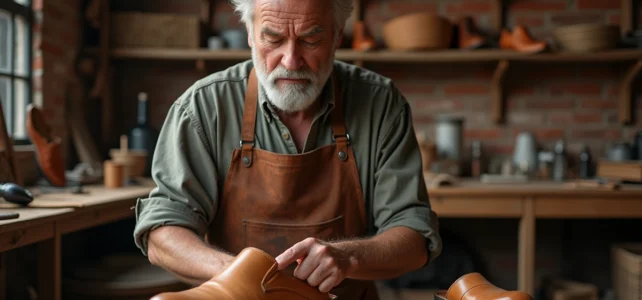
Scholl does not centralize its production in a single country. Manufacturing varies according to the range and type of product. Some high-end lines, such as the Scholl ICONIC collection, claim to be handcrafted in Italy, in the Milan region.
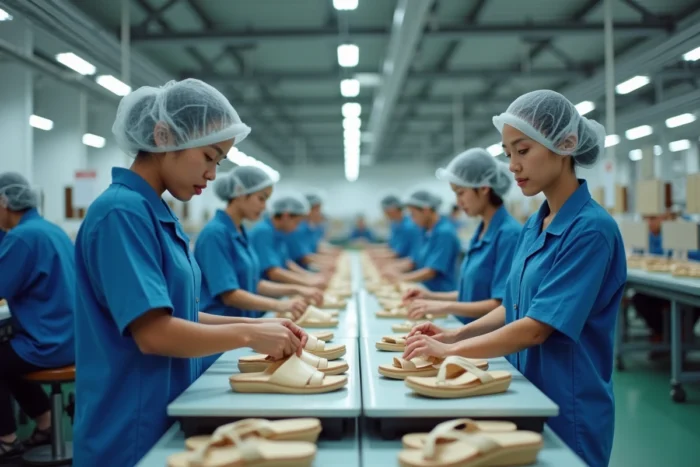
More accessible models and widely distributed sandals are manufactured in factories located in Asia or Eastern Europe, according to the usual circuits of the shoe industry.
A detailed file outlining the manufacturing of Scholl shoes confirms this geographical distribution by ranges. The official Scholl site, however, does not publish a summary sheet of production countries by model, making it difficult for consumers to verify the information.
| Range | Known place of manufacture | Positioning |
|---|---|---|
| Scholl ICONIC (leather, handcrafted) | Italy (Milan) | High-end, anniversary collection |
| Public sandals and mules | Multi-country (Asia, Eastern Europe) | Entry and mid-range |
| Orthotic insoles and accessories | Not precisely communicated | Care and comfort |
Medical heritage of Scholl and impact on production choices
The Scholl brand has built its identity around podiatry and foot biomechanics, not around an industrial terroir. William Mathias Scholl patented his first invention, the Foot-Eazer, in 1904, and then founded a podiatry college in Illinois in 1912. This medical DNA explains why Scholl emphasizes the technology of its insoles and the comfort of its shoes rather than the geographical origin.
The brand’s anchoring is scientific, not manufacturing. The official pages detail patented technologies (GelActiv, Biomechanics, Bioprint, Memory Cushion) without ever specifying in which factories they are integrated into the products. This communication choice directs the consumer towards functional benefits, not towards “made in”.
Scholl technologies and their link to materials
- GelActiv: insole with gel insert, designed to absorb shocks during prolonged walking
- Biomechanics: arch support system, directly inherited from the founder’s podiatric work
- Memory Cushion: memory foam that adapts to the foot’s morphology, used in certain ranges of sandals and closed shoes
These technologies are the real selling points. The question of the place of manufacture takes a back seat in the brand strategy, which does not facilitate traceability for the buyer concerned about the origin of their products.
Scholl facing consumer traceability expectations
The official Scholl site structures its pages around collections, product visuals, and the founder’s legacy. No section dedicated to production sites exists on the brand’s website. This opacity contrasts with the current trend in the shoe market, where competing brands display the country of manufacture right on the product sheet.
For consumers, the only reliable way to know the origin of a Scholl model is to check the physical label inside the shoe. The mentions “Made in Italy” appear on models from the ICONIC range and on certain leather creations. For other lines, the labels indicate various origins.
What the label of a Scholl shoe reveals
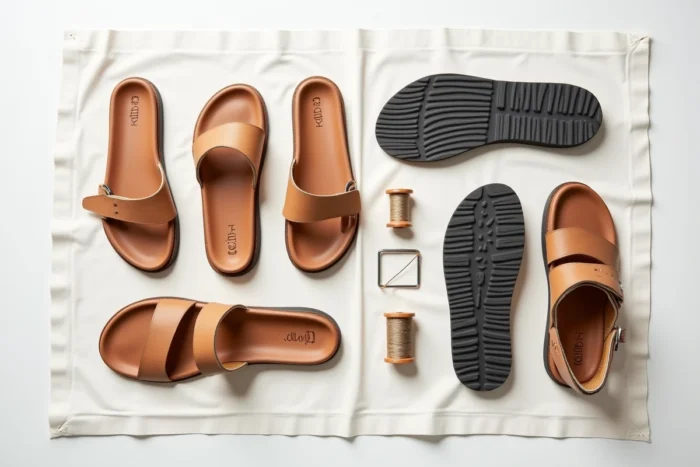
The mention “handmade in Italy” only concerns a fraction of the catalog. The rest of the production carries different country mentions depending on the batches and seasons. This dispersion is common in the branded shoe industry, but Scholl does not document it publicly.
In practice, a buyer specifically looking for Scholl shoes made in Italy should target the ICONIC range or the high-end leather models. Moderately priced sandals and mules generally do not carry this mention.
Scholl’s positioning between comfort, fashion, and origin
Scholl has repositioned its image in recent years around design and fashion, in addition to its historical podiatric comfort. The ICONIC collection, launched to celebrate the brand’s centenary, illustrates this shift: new visual identity, noble materials like leather, claimed Italian manufacturing.
This repositioning creates two universes within the same brand. On one side, foot care products and functional shoes whose place of manufacture is not highlighted. On the other, a premium line that capitalizes on Italian artisanal expertise.
- ICONIC range: leather, handcrafted in Milan, higher price, selective distribution
- Current range: technical insoles, synthetic or mixed materials, multi-country production, wide distribution in pharmacies and online
- Orthotic accessories: GelActiv insoles, nail clippers, graters, without communication on the place of manufacture
This duality explains why the answer to the question “where are Scholl shoes made” cannot be summed up in one sentence. The origin depends on the model, material, and chosen range level. The inner label remains the only reliable indicator, and the brand does not seem to want to simplify this reading for its customers.